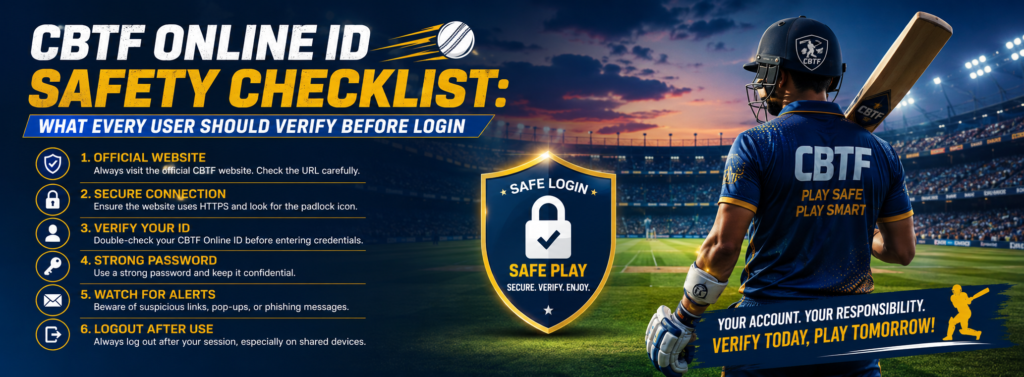
A smooth and fast user experience should never compromise safety. Every time users access their accounts, enter credentials, or interact with live data, sensitive information is exchanged behind the scenes. This makes security a critical factor for any platform. Whether you are new or experienced, following a proper checklist before logging in to your cbtf online id can help protect your account and personal data.
Platforms like cbtfturbo247 are designed to offer speed and convenience, but user awareness plays an equally important role. Understanding what to verify before accessing your account can prevent risks such as unauthorized access, data leaks, or fraud attempts.
What Does Account Safety Really Mean?
Account safety is more than just having a password. It includes multiple layers of protection that work together to ensure your data remains secure.
In the context of a safe cricket ID provider platform, safety involves:
- Protecting login credentials
- Securing personal and financial data
- Ensuring safe communication between user and server
- Preventing unauthorized access
Without proper precautions, users may unknowingly expose their accounts to threats such as phishing, hacking, or identity misuse.
The Importance of Verifying Before Login
Before entering your details, it is essential to check whether the platform environment is secure. Many risks occur not because of weak systems, but due to user negligence.
A few seconds of verification can help:
- Avoid fake or duplicate websites
- Prevent credential theft
- Ensure you are accessing the correct platform
- Maintain account integrity
Users who regularly follow safety checks are far less likely to face account-related issues.
Key Safety Checklist Before Login
1. Verify the Website URL
Always check that the website address begins with “https”. This indicates a secure connection. Avoid clicking on random links or unknown sources.
2. Check for Secure Connection Indicators
A padlock icon in the browser shows that your connection is encrypted. If this is missing, avoid entering any details.
3. Use Strong and Unique Passwords
Your password should not be simple or reused across platforms. Combine letters, numbers, and symbols to increase security.
4. Avoid Public Networks
Logging in through public Wi-Fi can expose your data. Always use a secure and private internet connection.
5. Enable Additional Verification Layers
Features like OTP or secondary verification add an extra layer of protection during cbtf login attempts.
Types of Security Measures Used in Platforms
SSL/TLS Encryption
Secure Sockets Layer (SSL) and Transport Layer Security (TLS) protect data during transmission. They ensure that information shared between users and servers remains private.
Two-Factor Authentication (2FA)
This requires users to verify their identity through an additional step, such as a code sent to their device.
Data Encryption at Rest
Stored data is encrypted so that even if systems are accessed, the information remains unreadable.
Secure Payment Integration
Financial transactions are protected using encrypted gateways that follow global standards.
How Security Measures Protect Users
Secures Login Credentials
When users log in, their details are encrypted before being sent to servers. This prevents interception by unauthorized parties.
Protects Sensitive Information
Personal and financial data are stored securely, reducing the risk of misuse.
Prevents Unauthorized Access
Multiple verification steps ensure that only authorized users can access accounts.
Ensures Safe Communication
All interactions, including notifications and updates, are protected through secure channels.
Common Risks Users Should Avoid
Even with strong systems, certain user actions can create vulnerabilities:
- Clicking on unknown links
- Sharing login details with others
- Using weak or repeated passwords
- Ignoring security warnings in browsers
Awareness of these risks is crucial for maintaining a safe account environment.
Challenges in Maintaining Account Security
User Negligence
Many issues arise when users skip basic verification steps.
Phishing Attempts
Fake websites or emails can trick users into revealing sensitive details.
Device Security Issues
Using outdated devices or software can increase vulnerability.
Password Mismanagement
Weak or reused passwords make accounts easier to compromise.
Best Practices for Users
To ensure maximum safety, users should follow these simple but effective practices:
- Always verify the website before login
- Use strong and unique passwords
- Enable additional authentication layers
- Avoid logging in from shared or public devices
- Regularly update account credentials
- Monitor account activity for unusual behavior
These steps significantly reduce the chances of security breaches.
Why This Checklist Matters for cbtf online id Users
Following a proper checklist before accessing your account is not just a precaution it is a necessity. With increasing online activity, risks are also evolving. A secure approach ensures that users can focus on their experience without worrying about safety issues.
Platforms are built with advanced systems, but user responsibility completes the security chain. A few careful steps can make a major difference in protecting your account.
Conclusion
Security is the foundation of any reliable cricket id online platform. From protecting login credentials to securing sensitive data, every step matters. While systems provide advanced protection, user awareness plays an equally important role.
By following a simple safety checklist before logging in, users can avoid common risks and maintain full control over their accounts. A balanced approach between technology and user responsibility ensures a safe and seamless experience.
FAQs
Q-1) What should I check before logging into my account?
Always verify the website URL, ensure a secure connection, and avoid using public networks.
Q-2) Why is a secure connection important?
It ensures that your data is encrypted and cannot be intercepted during transmission.
Q-3) Can using public Wi-Fi affect account safety?
Yes, public networks are less secure and can expose your data to risks.
Q-4) How can I make my account more secure?
Use strong passwords, enable additional verification, and avoid sharing login details.
Q-5) What is the biggest risk during login?
Accessing fake or unsecured websites is one of the most common risks.
Q-6) Do platforms provide enough security on their own?
They offer strong protection, but users must follow basic safety practices to ensure full security.